
What Is Commercial Boiler Servicing?
Commercial boiler servicing is a scheduled inspection, clean and safety check of each boiler in a non-domestic plant room, normally once a year and sometimes every six months on heavily used plant. The engineer follows the manufacturer's schedule for inspection, cleaning, combustion checks and safety tests. Required strip-down and parts renewal vary by model. Ask for a service report and agree whether a separate gas safety inspection and record are included.
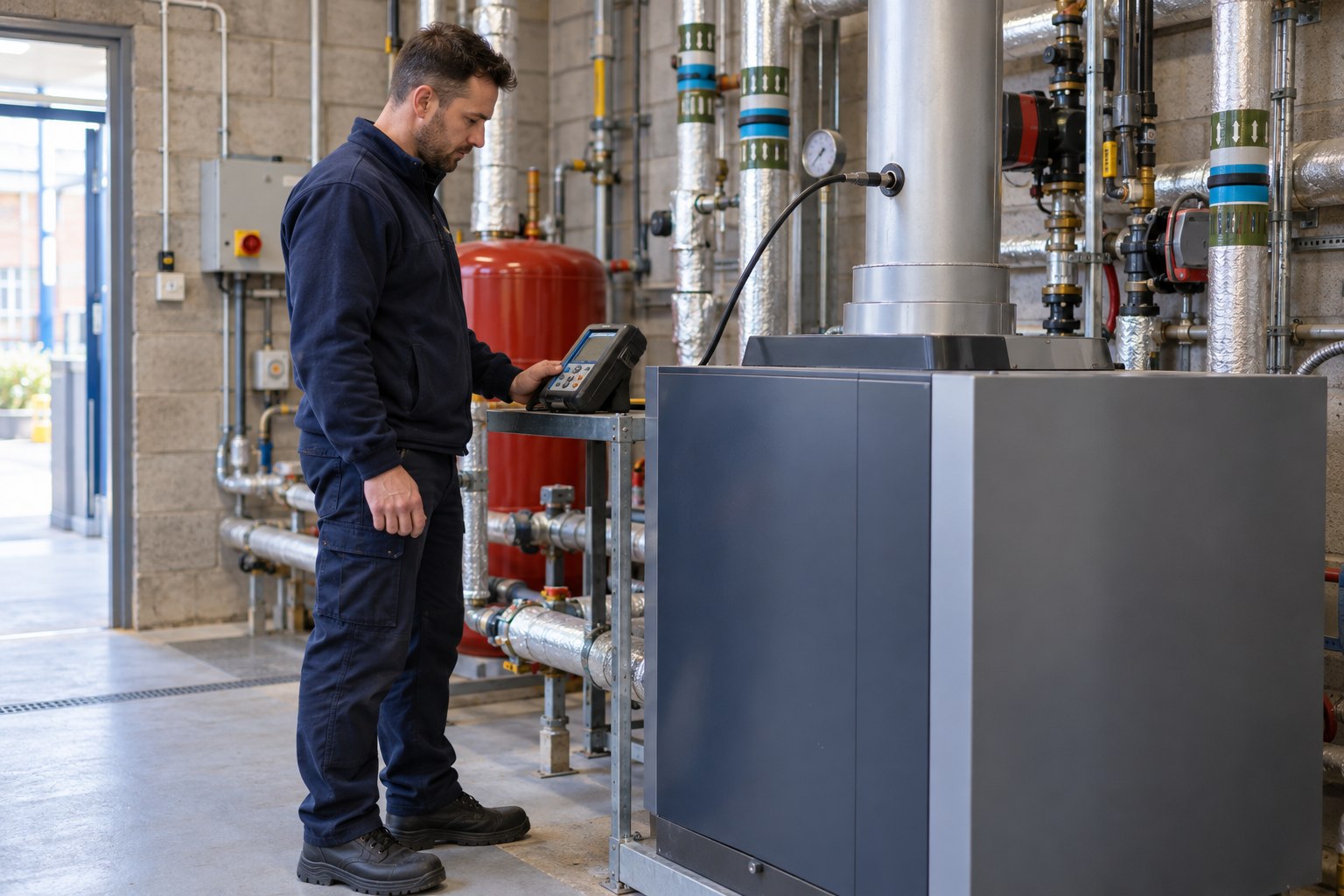
A service history is a condition of most boiler warranties, and it is the most practical way for a business to show it is keeping gas appliances in a safe condition. It also catches the gradual problems — a dirty burner, a weeping seal, a fan bearing starting to whine — before they become a lockout on the coldest day of the year.
Signs Your Commercial Boilers Are Due a Service
- More than twelve months have passed since the last service date in the logbook
- A new tenant, insurer or landlord has asked for a current gas safety record
- The boiler warranty conditions require an annual service you have not yet booked
- Gas consumption has crept up even though building use has not changed
- Flue terminals are discoloured, or there is soot or condensation staining around the boiler casing
- Nobody can find the commissioning sheets or last service report for the plant
Commercial Boiler Service Options Explained
- Annual full service — the standard visit: burner and heat exchanger cleaned, combustion analysed, safety devices tested and a gas safety record issued.
- Six-monthly service — a full service before the heating season and an inspection mid-season, for plant that runs long hours or serves sensitive buildings such as care homes.
- Service plus plant room check — the boiler service extended to pumps, pressurisation unit, expansion vessels, gas interlock and ventilation. Useful where there is no separate maintenance contract.
- Combined gas safety inspection — servicing of the boilers alongside other gas appliances on site, such as catering equipment or water heaters, by an engineer qualified for each.
Match the service to the manufacturer
Service procedures differ between premix condensing boilers and forced-draught burners. Ask the engineer to use the current manufacturer schedule, including approved cleaning methods and required gasket renewal. Confirm which combustion and safety readings will be recorded and whether a separate gas safety inspection is included.
What to Include When Asking for a Quote
List every boiler to be serviced with its make, model and output, plus the type of burner — a pre-mix condensing boiler and a forced-draught burner on a cast-iron boiler are very different jobs in time and skill. Mention any other gas appliances on the site you want inspected on the same visit, since the engineer may need additional categories for them.
Send the last service report if you have one, including any defects noted, so the engineer can check whether earlier recommendations were acted on. Tell them if the plant must stay running during occupied hours, which affects whether boilers are serviced one at a time or the whole plant can be shut down.
The quotation should state the price per boiler or per visit, what checks are included, whether minor consumables such as gaskets and electrodes are covered, and what document you receive at the end. Ask whether defects found during the service will be quoted separately before any repair work is done.
How Much Does Commercial Boiler Servicing Cost?
| Plant serviced | Typical cost |
|---|---|
| Single wall-hung commercial boiler | £180 – £300 |
| Two to three boilers in one plant room | £300 – £550 |
| Floor-standing boilers with forced-draught burners | £550 – £800+ |
Prices are usually quoted excluding VAT and per visit. If you also want pumps, pressurisation and controls looked after, a planned maintenance contract can work out better value than separate service bookings.
The Commercial Boiler Service: What to Expect
- Pre-service checks. The engineer reviews the logbook, checks the boiler is operating and takes initial combustion readings.
- Isolation and strip-down. Gas and power are isolated; the burner is removed and the heat exchanger, condensate trap and siphon are inspected and cleaned.
- Component checks. Electrodes, seals, gaskets and fans are inspected; required replacements follow the manufacturer's instructions and agreed repair scope.
- Reassembly and combustion analysis. The boiler is refired and the flue gas analysis is checked against the manufacturer's figures.
- Safety tests. Flame failure, overheat stats, air pressure devices and the plant room gas interlock are tested.
- Records. The service report and any agreed gas safety inspection record are handed over and the logbook is updated.
Regulations and Paperwork
Workplace gas appliances, flues and pipework must be kept in a safe condition under the applicable gas safety and health and safety legislation, and landlords of residential premises must arrange annual gas safety checks. The HSE gas safety guidance explains these duties. Servicing does not need planning permission or building regulations approval. Your insurer, landlord or lease may set additional servicing requirements, so check them and keep every service record.
How to Choose a Commercial Boiler Servicing Engineer
- Does the engineer hold non-domestic Gas Safe categories for your boilers and any other gas appliances on site?
- Are they familiar with your boiler manufacturer and burner type?
- Will you receive a non-domestic gas safety record and a written service report?
- How are defects found during the service reported and priced?
- Can they remind you when the next service is due?
- Do they also offer repairs and emergency call-outs if a fault is found?
Competence depends on the work and premises
For gas work in offices, shops, schools and similar premises, check the attending engineer on the Gas Safe Register. Their current qualifications must cover the fuel, appliance and work involved; domestic registration alone does not cover non-domestic appliances. Some industrial premises fall under different provisions: the HSE guidance for employers explains where a competent person is required. Ask the contractor to confirm which rules apply to your building. Water-side work and controls also need appropriate competence, but do not all require gas registration.
Frequently Asked Questions
How often should a commercial boiler be serviced?
At least once a year, in line with most manufacturers' instructions. Plant that runs long hours or serves care homes, schools or other sensitive buildings is often serviced every six months.
Is a commercial boiler service a legal requirement?
The law requires gas appliances in workplaces to be maintained in a safe condition, and annual servicing is the usual way to show that. Rented residential premises also need an annual gas safety check.
Can the heating stay on during a service?
On multi-boiler plant, engineers usually service one boiler at a time while the others run. A single-boiler building will be without heat for a few hours, so book servicing outside the coldest months or occupied hours.
What is a non-domestic gas safety record?
It is the written record an engineer issues after checking commercial gas appliances, listing what was tested and any defects found. Keep it with the plant logbook for your insurer, landlord or auditor.