
What Are Commercial Boiler Repairs?
Commercial boiler repairs are reactive call-outs to find and fix a fault on non-domestic boiler plant — a boiler that has gone to lockout, will not ignite, keeps tripping on overheat or has started leaking. The engineer's first job is diagnosis: reading the fault history on the boiler or sequence controller, then testing the burner, gas valve, ignition, flame detection, fans, pumps and pressurisation unit until the cause is found.
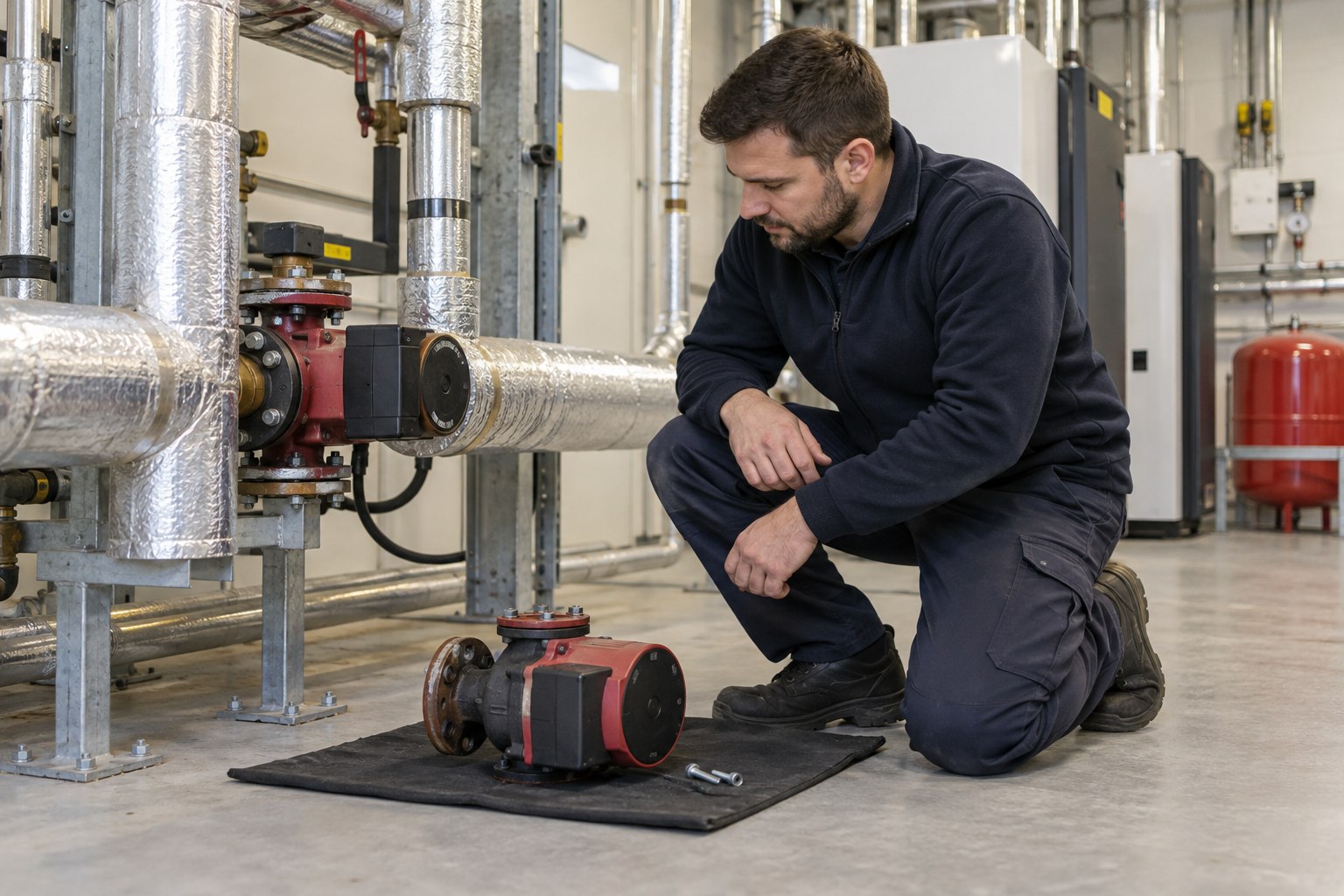
A commercial boiler often stops because of something outside its casing. A failed pump, a stuck motorised valve, a pressurisation unit that has lost its charge, or a gas safety interlock tripped by a plant room ventilation fan can all shut the boilers down. An engineer who understands the whole plant room will find that faster than one who only replaces boiler parts.
Signs You Need a Commercial Boiler Repair
- One or more boilers showing a lockout or fault code that returns after a reset
- The plant runs but the building does not reach temperature
- Low-pressure alarms on the pressurisation unit, or the unit pumping constantly
- Water around the base of a boiler, a header or a pump
- Banging, whistling or kettling noises from the boilers or flow pipework
- The gas interlock or ventilation fan alarm repeatedly shutting off the gas supply
Common Commercial Boiler Faults and Repairs
- Ignition and flame failure — worn ignition electrodes, a failing flame sensor or a faulty gas valve. Usually repairable in a single visit if the part is in stock.
- Fan and air pressure faults — a seized combustion fan, blocked air pressure switch tube or obstructed flue. Fans on larger boilers can be expensive and may need ordering.
- Overheat and flow faults — a failed pump, closed valve or air lock starving the boiler of water flow, causing overheat lockouts.
- Heat exchanger leaks — corrosion or thermal stress on the heat exchanger. Often the most expensive repair, and the point at which replacement should be considered on older plant.
- Control board and sequence controller faults — electronic failures that stop boilers firing or prevent the cascade sharing load correctly.
Authorise diagnosis before ordering parts
A fault code is a starting clue rather than a diagnosis. The engineer may need to check electrical supply, pump operation, system pressure, sensors and safety interlocks before condemning a burner or control board. Agree an initial attendance allowance and an approval limit for further labour and parts. Request the findings in writing.
What to Include When Asking for a Quote
Note the exact fault code or lockout message on each boiler and on the sequence controller, and whether it clears on reset and how quickly it returns. Record the system pressure on the pressurisation unit gauge and whether any boilers are still firing. This lets an engineer turn up with the likely parts, rather than diagnosing on the first visit and ordering on the second.
Give the make, model and age of each boiler and say whether a maintenance contractor already looks after the plant — a repair contractor will want to know who last serviced it and what the last report said. Confirm the access arrangements: who holds the plant room key, whether a permit to work is required, and any times the site is locked.
Ask for the call-out charge, hourly rate after the first hour, and any out-of-hours premium before booking. A written repair quote should name the part, its cost and lead time, the labour estimate and whether the repair includes recommissioning the boiler and a combustion check afterwards.
How Much Do Commercial Boiler Repairs Cost?
| Repair type | Typical cost |
|---|---|
| Diagnosis and minor repair (electrodes, sensors, reset) | £150 – £450 |
| Component replacement (gas valve, fan, pump, PCB) | £450 – £1,200 |
| Major repair (heat exchanger, burner assembly) | £1,200 – £2,500+ |
Rates for business customers are usually shown excluding VAT, and evening, weekend and bank holiday call-outs typically cost more. If a major repair approaches a third of the price of new plant, ask for a replacement quote to compare.
The Commercial Boiler Repair Process: What to Expect
- Call-out and safety check. The engineer checks the plant room is safe to work in and confirms the gas supply and interlocks.
- Diagnosis. Fault history is read, components are tested and the cause is identified.
- Quote for the repair. You are told the part, cost and lead time before any significant work goes ahead.
- Repair. The faulty component is replaced or repaired, and related parts are checked.
- Recommissioning. The boiler is fired, combustion is checked and safety devices are tested before it returns to service.
- Report. You receive a job sheet recording the fault, the repair and any other defects found.
Regulations and Safety
For premises covered by Gas Safe registration requirements, gas boiler work needs a registered engineer qualified for the fuel and appliance type, including non-domestic categories where relevant. If an engineer finds a dangerous condition, the Gas Safe Register unsafe situations procedure allows them, with permission, to turn off and label the appliance; it must not be used again until the fault is put right. Employers and those in control of premises have duties to keep gas equipment safe under the legislation applicable to their site. Repairs do not usually need building regulations approval or planning permission, unless they alter the flue or replace the boiler.
How to Choose a Commercial Boiler Repair Engineer
- Do they hold non-domestic Gas Safe categories for your boiler type?
- Do they carry common spares for your boiler make, or have a reliable supplier nearby?
- What is their call-out charge, hourly rate and out-of-hours premium?
- How quickly can they attend, and is that response written down?
- Will they give you a written report of the fault and any other defects?
- Do they guarantee the repair and the parts fitted?
Competence depends on the work and premises
For gas work in offices, shops, schools and similar premises, check the attending engineer on the Gas Safe Register. Their current qualifications must cover the fuel, appliance and work involved; domestic registration alone does not cover non-domestic appliances. Some industrial premises fall under different provisions: the HSE guidance for employers explains where a competent person is required. Ask the contractor to confirm which rules apply to your building. Water-side work and controls also need appropriate competence, but do not all require gas registration.
Frequently Asked Questions
Why does our commercial boiler keep locking out?
Repeated lockouts usually point to ignition or flame detection problems, poor water flow, a gas supply issue or a flue or air supply fault. Resetting it repeatedly is not a fix — an engineer should diagnose the cause.
Can one boiler be repaired while the others keep running?
On most multi-boiler plant, yes. The faulty boiler can be isolated while the remaining boilers carry the load, although the building may run cooler in very cold weather.
How quickly can a commercial boiler engineer attend?
Many contractors offer same-day or next-day attendance, but it depends on location and workload. Sites with a maintenance contract usually get priority response times written into the agreement.
When is a repair not worth doing?
If the heat exchanger has failed on an older boiler, parts are obsolete, or repair costs are mounting each winter, replacement is often better value. Ask the engineer for a written comparison.