
What Is Commercial Heating Maintenance?
Commercial heating maintenance is an ongoing contract under which a heating contractor looks after the whole of a building's heating plant on a planned schedule — boilers, pumps, pressurisation units, expansion vessels, valves, calorifiers, water treatment and controls — and responds to breakdowns within agreed times. It is usually called planned preventive maintenance, or PPM, and it is how most schools, office landlords, care groups and multi-site retailers manage their heating.
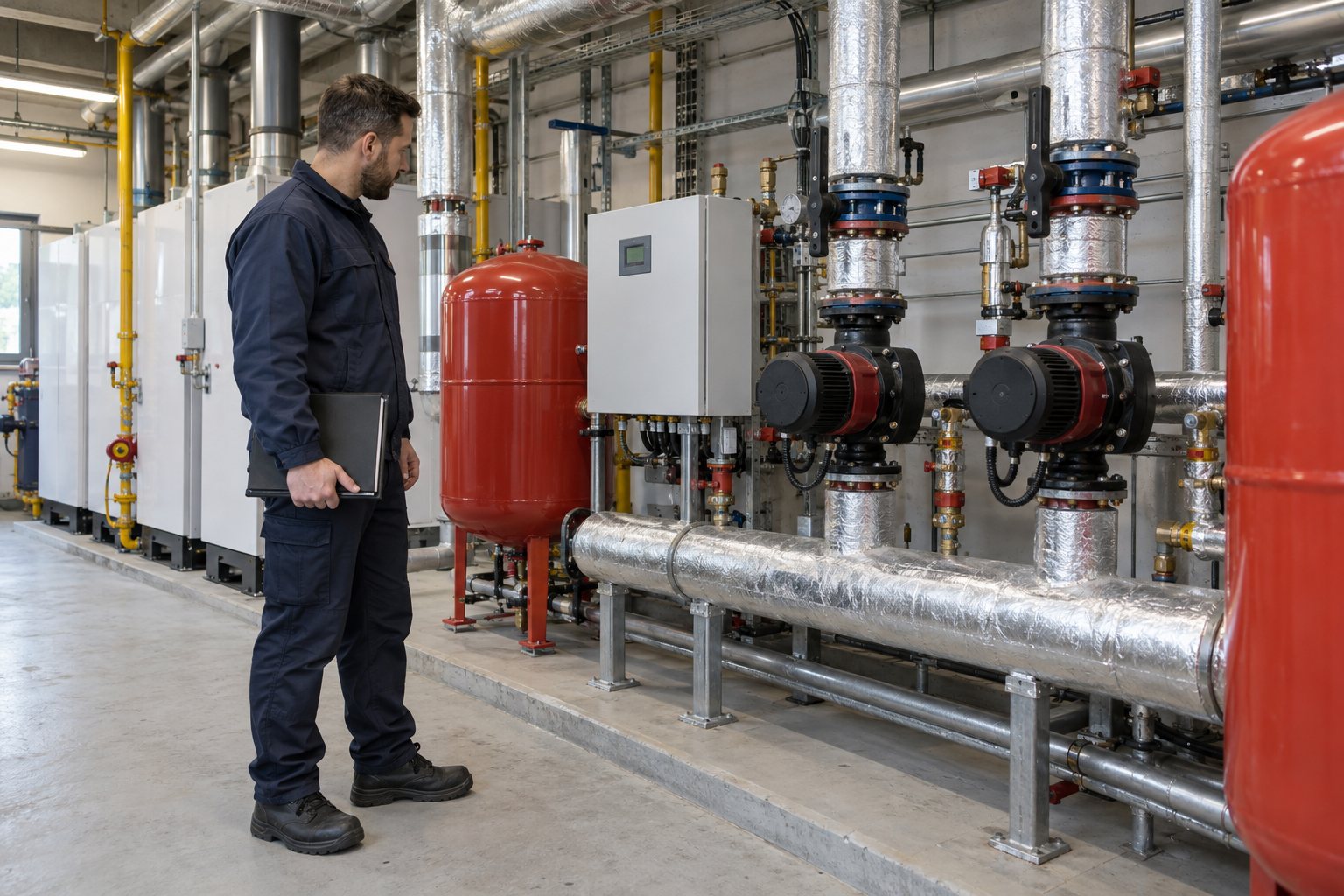
A boiler service checks the boilers; a maintenance contract can cover supporting equipment on its agreed asset schedule. The contractor keeps an asset register, follows a task schedule for each item of equipment, logs readings and defects, and gives the client the records needed for insurers, auditors and compliance checks.
Signs You Need a Heating Maintenance Contract
- Breakdowns are handled by whichever engineer is free, with no consistent record of what was done
- The site has several boilers, pumps and a pressurisation unit, but only the boilers are ever checked
- Calorifiers and hot water storage need temperature monitoring for legionella control
- An insurer, landlord or inspection body has asked for documented maintenance records
- You manage several buildings and want one contractor, one schedule and one invoice
- Emergency call-out rates are adding up because nobody has priority response
Commercial Heating Maintenance Contract Types Explained
- Planned maintenance only — scheduled visits at agreed intervals, with repairs and call-outs charged separately at contract rates.
- Planned maintenance with reactive cover — scheduled visits plus agreed attendance targets for breakdowns, with labour for call-outs included and parts charged as used.
- Comprehensive contract — visits, call-outs, labour and most parts included for a fixed annual fee. Highest cost, but most predictable budget; check the exclusions carefully.
- Multi-site framework — one contractor covering a portfolio of buildings with a common schedule, reporting and pricing structure.
Define what a response commitment means
A response time may mean a returned phone call or an engineer on site; it does not necessarily promise restored heating. Define total and partial loss of heat, occupied hours, weekends and access arrangements. Ask whether consumables, pump repairs, water treatment and controls faults are included or separately chargeable.
What to Include When Asking for a Quote
A contractor cannot price maintenance without knowing what is in the plant room. Provide an equipment list if you have one — boilers, burners, pumps, pressurisation units, calorifiers, water heaters, expansion vessels, motorised valves, controls and any heat pumps — with makes, models and ages. If you do not have a list, ask for a paid or free initial survey to produce one, because it becomes the basis of the contract.
State the response times you need for a total loss of heating compared with a partial fault, and whether out-of-hours cover is needed — a care home or a hotel will have very different expectations from an office that closes at weekends. Mention any compliance tasks you want included, such as legionella temperature checks on calorifiers or pressure system examinations.
The proposal should include the task schedule and visit frequency for each type of equipment, response time commitments, what labour and parts are covered, call-out rates for anything outside the contract, how records and reports are delivered, and the notice period and price review terms. Compare contracts on scope, not just annual fee.
How Much Does Commercial Heating Maintenance Cost?
| Contract scope | Typical annual cost |
|---|---|
| Small site, one or two boilers, planned visits only | £450 – £1,200 |
| Medium plant room with reactive cover | £1,200 – £2,800 |
| Large plant or comprehensive contract with parts | £2,800 – £4,500+ |
Contract prices are usually quoted excluding VAT and reviewed annually. Multi-site and comprehensive contracts can exceed this range; ask for a per-site breakdown so you can compare like with like.
How a Maintenance Contract Works: What to Expect
- Site survey and asset register. The contractor records every item of heating plant and its condition.
- Schedule agreed. Visit frequency and task lists are set for each item of equipment, often based on the SFG20 maintenance standard.
- Planned visits. Engineers service boilers, check pumps, pressurisation and controls, and record readings in the logbook.
- Reactive response. Breakdowns are attended within the agreed response time and repaired at contract rates.
- Reporting. You receive visit reports, defect lists with quotes for remedial work, and compliance certificates.
- Annual review. Plant condition, costs and any replacement recommendations are reviewed before the contract renews.
Regulations and Compliance
Employers and those in control of premises must keep gas appliances maintained in a safe condition under the Gas Safety (Installation and Use) Regulations. Stored hot water systems need a legionella risk assessment and control measures — the HSE legionella guidance explains what is expected, including temperature monitoring of calorifiers. Some pressurised systems and vessels fall under the Pressure Systems Safety Regulations and need a written scheme of examination. A maintenance contract does not need planning permission or building regulations approval, but replacing plant under it may.
How to Choose a Commercial Heating Maintenance Contractor
- Do their engineers hold non-domestic Gas Safe categories for all the gas appliances on site?
- Can they show maintenance contracts for similar buildings and plant sizes?
- What response times will they commit to in writing, and what happens if they miss them?
- Which parts and tasks are excluded from the contract price?
- How are reports, logbooks and certificates provided, and can you access them online?
- What notice period applies if you want to end the contract?
Competence depends on the work and premises
For gas work in offices, shops, schools and similar premises, check the attending engineer on the Gas Safe Register. Their current qualifications must cover the fuel, appliance and work involved; domestic registration alone does not cover non-domestic appliances. Some industrial premises fall under different provisions: the HSE guidance for employers explains where a competent person is required. Ask the contractor to confirm which rules apply to your building. Water-side work and controls also need appropriate competence, but do not all require gas registration.
Frequently Asked Questions
What is the difference between servicing and a maintenance contract?
A service checks the boilers once or twice a year. A maintenance contract covers the whole heating plant on a schedule, includes agreed breakdown response times and provides ongoing records.
How many maintenance visits a year are typical?
Most commercial heating contracts include two to four planned visits a year, with more frequent checks for items such as calorifier temperatures where legionella control requires them.
Are parts included in a heating maintenance contract?
It depends on the contract type. Planned-only contracts charge for parts; comprehensive contracts include most parts but usually exclude major items such as heat exchangers and complete boilers.
How long are commercial heating maintenance contracts?
One to three years is common, with an annual price review. Check the notice period and whether the contract renews automatically.